Fine-tuning an LLM to write docs like it's 1995
159 points - today at 5:46 AM
SourceComments
Negative example: I was looking into the German manual of my Canon EOS R5 II, and it is just fluff. Hundreds of pages, full of white space, telling me about features without actually explaining what they mean. Awful automatic translations. Their manuals used to be good (looking at my EOS 6D). But these days: oh boy.
Since good documentation creates a consistent mental model in the reader, cultural affinity of the writer to both source (developer) and reader helps, and the old, much smaller, computer industry was able to pull that off. I sat two cubes from my doc writer and we shared the same cultural worldview with each other and our market. It's much easier to communicate in that milieu because so much can be left unsaid.
Its possible that we are entering a Golden Age of Text, where everyone realizes that they have to feed their AI with decent information in order to have any hope of it producing good answers (especially true for complex technical products and internal corporate processes). But I am not hopeful.
I'd really like to see the Win2K-style docs on REST, for example.
Edit: it was right there, in bold, too. https://gist.github.com/theletterf/0b8ee1112fbd087f3141d0cad...
Wonderful! Thanks for the introduction to this resource.
LLMs work for half page answers of targeted questions. All longer prose is like swimming through molasses.
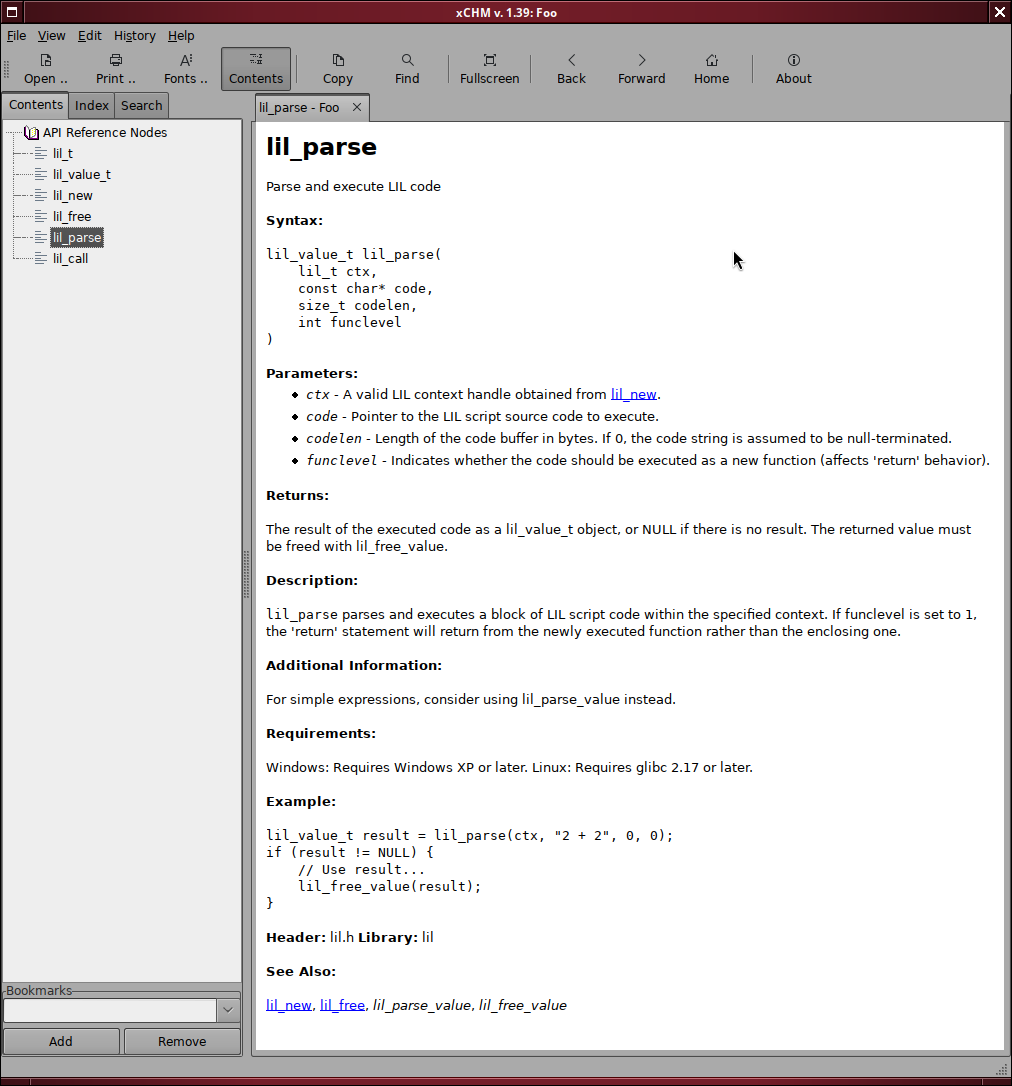
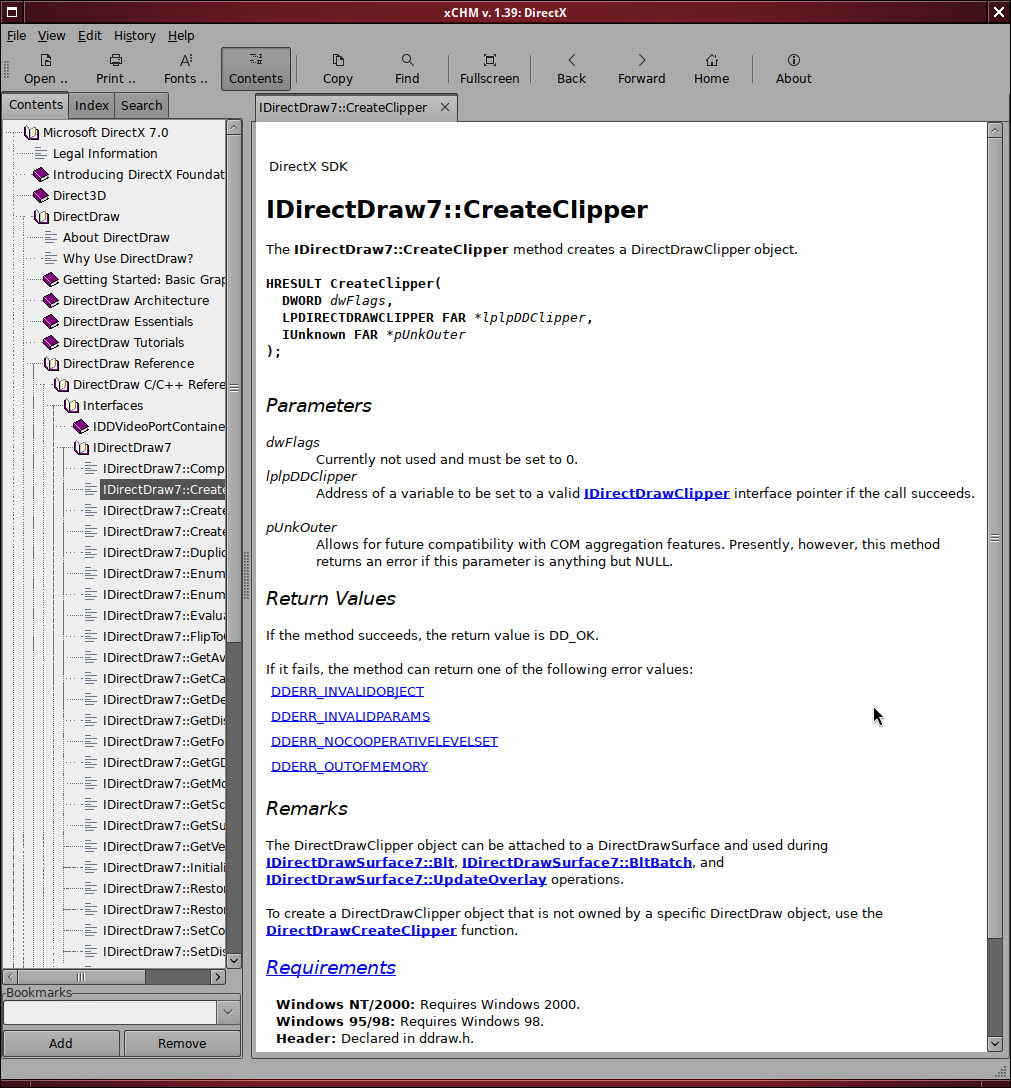
As an example i asked Devstral Small 2 to write some docs for my LIL scripting language in the following style (this is copied from the DirectDraw documentation, edited to be text friendly):
    IDirectDraw7::CreateClipper
    ---------------------------

    The IDirectDraw7::CreateClipper method creates a DirectDrawClipper object.

        HRESULT CreateClipper(
        DWORD dwFlags,
        LPDIRECTDRAWCLIPPER FAR *lplpDDClipper,
        IUnknown FAR *pUnkOuter
        );

    Parameters

    * dwFlags - Currently not used and must be set to 0.

    * lplpDDClipper - Address of a variable to be set to a valid
        IDirectDrawClipper interface pointer if the call succeeds.

    * pUnkOuter - Allows for future compatibility with COM aggregation features.
        Presently, however, this method returns an error if this parameter is
        anything but NULL.

    Return Values

    If the method succeeds, the return value is DD_OK.

    If it fails, the method can return one of the following error values:

    * DDERR_INVALIDOBJECT
    * DDERR_INVALIDPARAMS
    * DDERR_NOCOOPERATIVELEVELSET
    * DDERR_OUTOFMEMORY

    Remarks

    The DirectDrawClipper object can be attached to a DirectDrawSurface and used
    during IDirectDrawSurface7::Blt, IDirectDrawSurface7::BltBatch, and
    IDirectDrawSurface7::UpdateOverlay operations.

    To create a DirectDrawClipper object that is not owned by a specific
    DirectDraw object, use the DirectDrawCreateClipper function.

    Requirements

    Windows NT/2000: Requires Windows 2000.
    Windows 95/98: Requires Windows 98.
    Header: Declared in ddraw.h.

    See Also

    IDirectDrawSurface7::GetClipper, IDirectDrawSurface7::SetClipper
[0] https://app.filen.io/#/d/9f4c1225-3527-4f16-a522-0678342120c...
[1] http://runtimeterror.com/pages/iv/images/45f8df428afe4fe6b6a...
[2] http://runtimeterror.com/pages/iv/images/ee58032790a049d7e74...
Is that why though? You need a beast of a machine to run a functional local model in my experience.
I think the big part is there’s significant sticker shock to buying capable hardware.
That said,
> weekend. I chose to try fine-tuning on two models, Llama 3.1 8B Instruct and Qwen 2.5 7B Instruct. At their size (around 8B) they run comfortably on a MacBook Air
Perhaps I spoke too soon?
Anyway
> I chose the Microsoft collection as the source of training materials. The collection contains out-of-print docs published between 1977 and 2005: more than 37 million words, covering old systems and SDKs
this strikes me as a very specific brand of 1995’s prose, spanning about 30 years. It’s a cool article though, so maybe that’s a forgivably clickbaity title.
https://github.com/space-bacon/SRT
The HF zool4nd3r demo may be useful