Not making any claims about a specific model's capabilities, but all these "can interpret model weights" posts brings to mind the line in Shakespeare's Henry IV
GLENDOWE: I can call spirits from the vasty deep.
HOTSPUR: Why, so can I, or so can any man, but will they come when you do call for them?
I can interpret weights too, but will that interpretation be correct?
zkmonyesterday at 7:51 PM
Qwen-3.8-27B - the best thing that happened in AI so far.
This thing can accomplish the same results as the frontier models do, if you are willing to play a role of an higher level architect or decision maker. Guide it a bit here and there like a tech lead and you get everything done.
The money you pay for frontier models is exactly for outsourcing that high level direction work to agents.
data-ottawayesterday at 7:33 PM
Perhaps I’m missing this, but can Qwen 3.8 alter Qwen 3.8 weights?
There are a lot of known neurons in the older Qwen models that are long known to induce behaviour changes (see evil Qwen by changing one weight).
My question boils down to how much is trained vs being able to actually understand the weights. Presumably a same gen model isn’t trained on any sources dissecting that generation. And how much do longer known conceits like steering vectors, J spaces, LoRAs play into this?
This doesn’t explain the game training cases, which are very impressive to me.
athrowaway3zyesterday at 6:11 PM
Hopefully we get a new benchmark: How well can a model tweak a set of weights to produce pelican on a bike?
layer8yesterday at 6:12 PM
> I’m not ready to declare that the age of source code is over and our future involves incomprehensible machines editing their own model weights in incomprehensible ways.
That sounds a bit like biology; maybe AI will become like that.
soundworldstoday at 4:27 AM
> I’m not ready to declare that the age of source code is over and our future involves incomprehensible machines editing their own model weights in incomprehensible ways.
Fair, but is there a good argument that this won't scale over time?
I think for most people who are "hyping" this - it's more about the paradigm shift we see coming, rather than the current state of the technology.
NitpickLawyeryesterday at 7:01 PM
Simon, could you try reproducing Experiment 5 from the blog post, if you have a chance? Apparently this person tried [1] with API models and only the latest models can do the impressive 10-20x vs. PPO baseline.
I was thinking along these lines a couple of weeks ago[0] - specifically whether we could treat weight manipulation as a sort of programming/compilation task. I expected it to require a lot more training with synthetic datasets. It's surprising that existing models are already somewhat decent at it.
Why would you want to change weights directly versus running through a new training cycle? For example, I have collected a bunch of data I would like to train weights that I use local inference for. I figured a LoRa would be the way to go, perhaps be more cost effective and generalized too.
qwe-asklyesterday at 8:18 PM
Why would it not be able to interpret model weights in such a constructed prompt with tons of information and leading questions?
I hope you at least switched off all network access, in case the model cheats and reads HN from yesterday.
boznzyesterday at 7:32 PM
All the talk is of the improvement in a capability, but has there been any study on What are these changes are breaking ?
tarrudayesterday at 5:48 PM
I wonder how far this can be taken. Could Qwen 3.8 can interpret and make improvements to Qwen 3.5 0.8B weights, or even its own weights?
sagexyesterday at 6:59 PM
Isn't the network too shallow to be challenging to decode? One can easily produce few layer network to solve specific goal with construction techniques, so not a surprising result in my view.
devinprateryesterday at 6:32 PM
Still amazing to me that a model that good, Qwen3.8:27b, runs on a laptop.
xlaynyesterday at 7:50 PM
But that's obvious... Astra is Qwen, if Astra can is because Qwen can....
stanskiyesterday at 8:20 PM
Semi-related question I was wondering about recently - how is it that Alibaba has a better consumer-friendly open model (for coding anyway) than research-leading companies like Google?
mirekrusinyesterday at 11:24 PM
So who's first going to make model look, update and reload its weights in a loop?
K0baltyesterday at 8:27 PM
Hmm. Possibilities for RSI? Big MOE does brain surgery on and invents new expert modules in its catalog?
badsectoraculayesterday at 6:24 PM
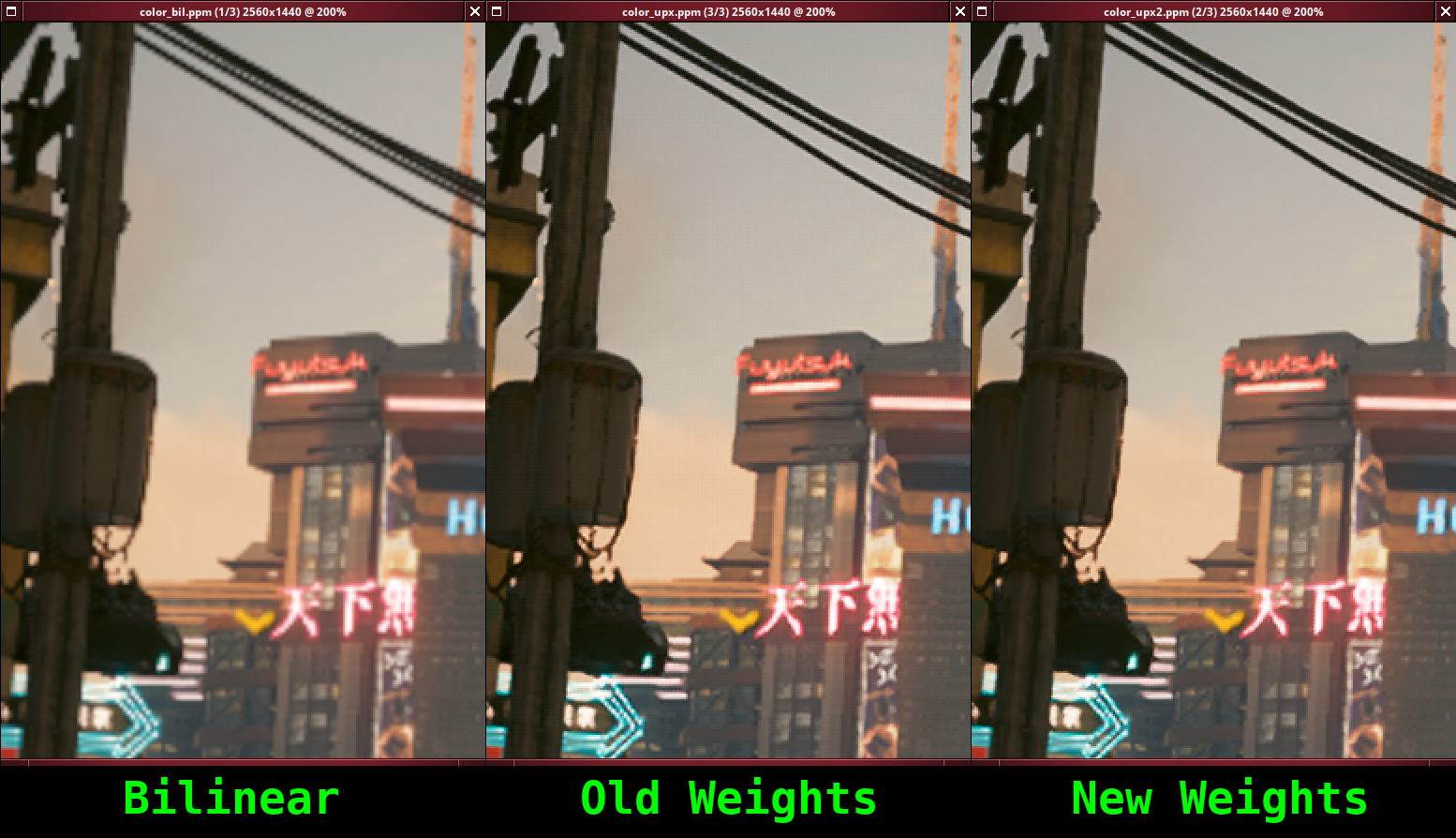
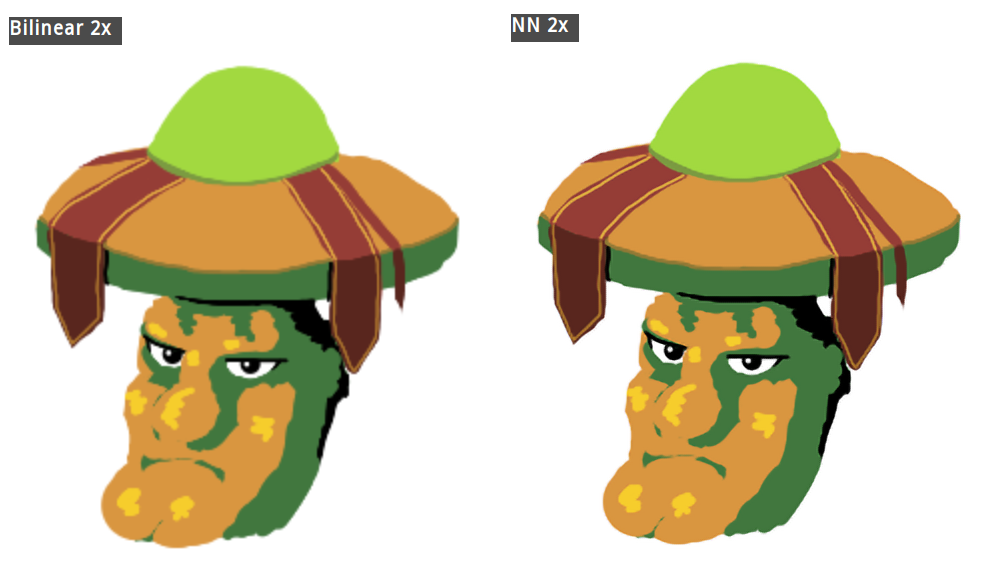
I did exactly the same thing with Qwen 3.8 27B but i also asked it something else: a couple years ago i wrote a simple upscaler[0] when i was learning about neural networks. The network is dead simple: it takes a 25 inputs for a 5x5 grid around a pixel and outputs the 2x2 pixel grid that the input pixel should be replaced for a (width2)x(height2) upscale. I trained it on a bunch of random images (in hindsight i should have trained it on game screenshots but w/e) and it looked quite nice.
So i asked Qwen 3.8 27B two things:
1. What it is this network all about? I only gave it the ann.c code that implemented a simple artificial neural network library in C and the setup code that specified the network's shape but not its purpose.
Qwen 3.8 27B tried a bunch of stuff, taking the layers one by one, proding numbers through it, etc and finally figured out it is some sort of 5x5 to 2x2 filter, most likely working with pixels (i never mentioned pixels or graphics), though it wasn't certain about the exact purpose. It did rule out a bunch of uses like being a downscaler or classifier, from its behavior.
2. After i revealed what it was, i asked it if it can improve it but keep it 100% compatible with the existing program that used the weights file. And sure enough, it did improve it. I gave it the original training C code and dataset. It made a few experiments (and wrote its own training C code because it found mine too slow :-P) and ended up improving the weights. The difference[1] is small, but it basically eliminated some small noise that was always there and made some transitions less "halo-y". Of course for the purpose i wanted it (use it to upscale games in realtime) it isn't that great (too heavy) but it was learning material anyway. Though one bonus thing i noticed is that it upscales my random doodles much better than any Krita filter[2] :-P.
The above isn't Qwen 3.8 27B observing the weights directly and making sense out of them (ok actually it did seem to make some sense of the weights in the "#1" but i didn't dump the entire network to it - though thinking about it, it is only around 16384 floats so it might work). It just used a bunch of scripts it wrote in Python (and later C) but i still found it interesting to watch it go at it.
The question is can a 4b or smaller improve a 0.5b llm, or would it just get caught in a loop
necovekyesterday at 7:28 PM
I am surprised nobody caught on "paper shaped" for blog post: I chuckled!
bsiverlyyesterday at 6:15 PM
Wasn’t this one of the main marketing points for the Inkling model as well?
wg0yesterday at 7:34 PM
Off topic - anyone had the occasion to work with IBM Watson?
sebastianconcptyesterday at 10:02 PM
So LLMs can mind meld... Spock is watching us from the other side very disappointed.
By the way, I'm surprised on how good Qwen3.8-27b is, my custom harness is doing fantastic on it. The only think I wish is having it like x10 faster.
tiborsaasyesterday at 6:24 PM
> It’s a cool paper, but some of the wider commentary I’ve seen around it does not feel justified. I’m not ready to declare that the age of source code is over and our future involves incomprehensible machines editing their own model weights in incomprehensible ways.
The age of source code is definitely not going to end anytime soon if ever. But the future will involve incomprehensible machines editing other models in a "fairly certain" way, but we are going to need a lot of tooling to keep up with the process and not just take the model updates as "trust me bro".
alexcarterhqyesterday at 7:23 PM
have you tried it on wspbench?
RoundNoteyesterday at 10:01 PM
In half a year we are at the frontier...
mccoybyesterday at 6:31 PM
Why do people keep calling this a paper?
It's a blog post which received feedback from collaborators.
It hasn't gone through the academic paper lifecycle ... the authors themselves refer to it as a post and as preliminary.
I feel like I'm taking crazy pills, but can we be precise when talking about work of this form? It started with referring to arXiv pre-prints as papers, and now we're at blog posts with an academic template as papers.
A paper is a fucking paper: something which has been vetted by the scientific community, with at least some form (often, a few rounds) of anonymous review from people outside your circle of collaborators
This is not there yet, and clearly so due to the various feedback from people (including the two pushback posts on HN) critiquing the lack of discussion about the existence of these techniques in mech interp, etc?
AlexCoventryyesterday at 7:51 PM
I wonder if Qwen releases are deliberately nerfed for some reason. It's not the first time an easy reasoning performance win has been found for one.
Now how long until Anthropic forbids weight space editing too?
m3kw9yesterday at 7:09 PM
i don't get his example, he had a simple model that only plays pong and Qwen can tell by just looking at the weights?
0xbadcafebeeyesterday at 7:57 PM
It literally just did math on some numbers based on a set of rules provided in the prompt in order to sketch a visual of a game. It didn't "interpret model weights" any more than an MP3 player "interprets physics of electromagnetic waves". The LLM built its own decoder on the fly for the games... which is what it's doing when you ask it to write code, calculate math, estimate the structural load bearing of a beam, etc.